
BREAKING NEWS: SANCTIONS BY THE TON
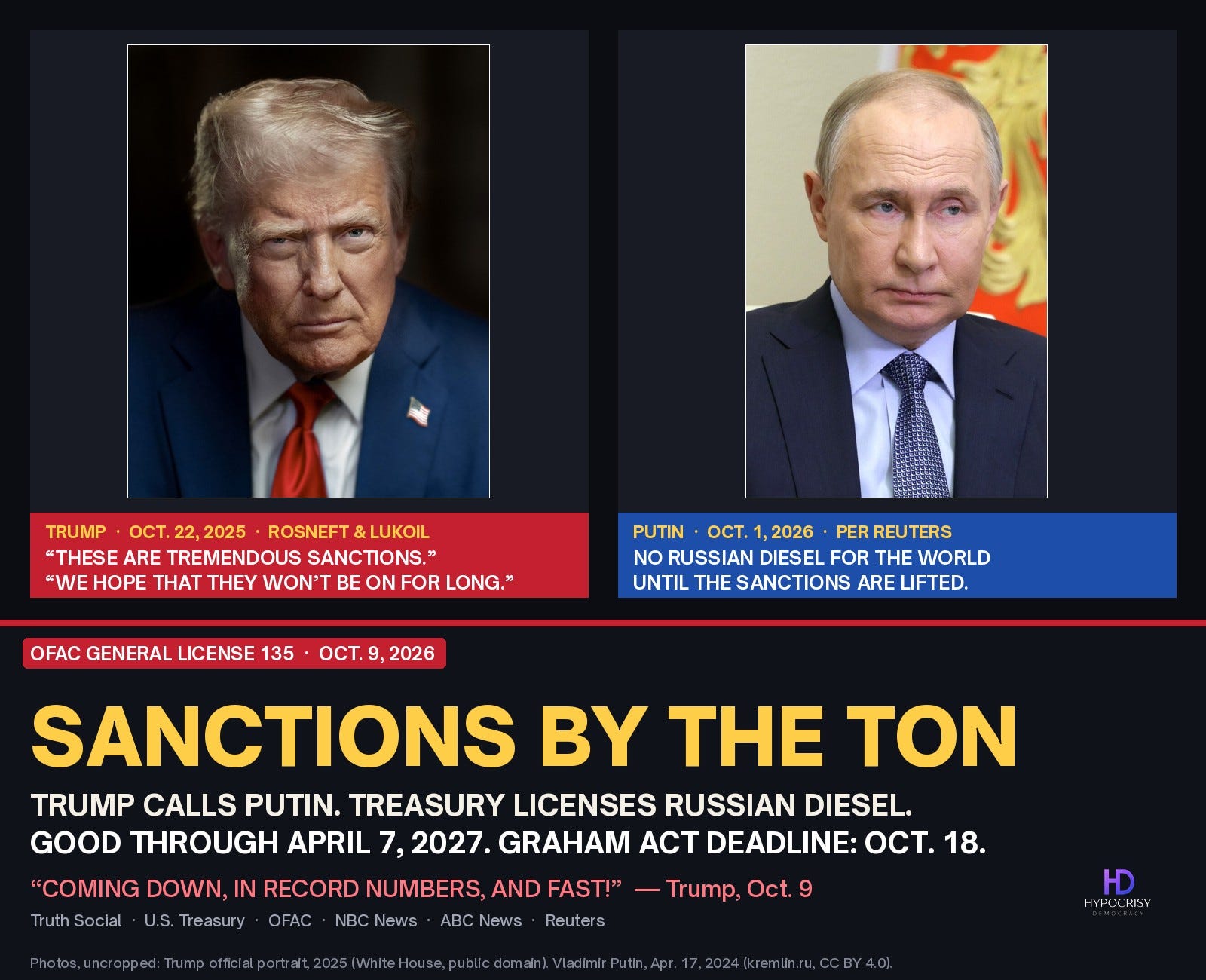
Quick question for you. What happens to “tremendous sanctions” when diesel hits a record? They get a license.
At 2:46 p.m. Eastern on Friday, Donald Trump posted on Truth Social that he had “just concluded a highly successful discussion with President Vladimir Putin.” The deal, in his words: Russia “will immediately supply over 300,000 Tons of Diesel Fuel to the American and Global Marketplace, another 500,000 Tons during the month of November, and 1,000,000 Tons immediately thereafter,” with 3,000,000 more tons depending on “the condition of their Diesel Refineries.” Diesel prices, he promised, “will be COMING DOWN, IN RECORD NUMBERS, AND FAST!”
Three minutes later, the Treasury Department posted: “Today, at President Trump’s direction, the Office of Foreign Assets Control (OFAC) is immediately issuing a temporary general license to allow the supply of Russian diesel to the global market.”
Then the paperwork landed. General License 135 authorizes “all transactions” otherwise banned by two sets of Russia sanctions rules that relate to “the sale, delivery, offloading, or importation, including importation into the United States, of diesel fuel of Russian Federation origin.” It runs through April 7, 2027. Per its digital signature, OFAC’s director signed it at 2:43 p.m., three minutes before the president announced the phone call. The license was ready before the deal was.
“Temporary,” in this case, means six months. That covers the midterms, the winter, and the start of spring.
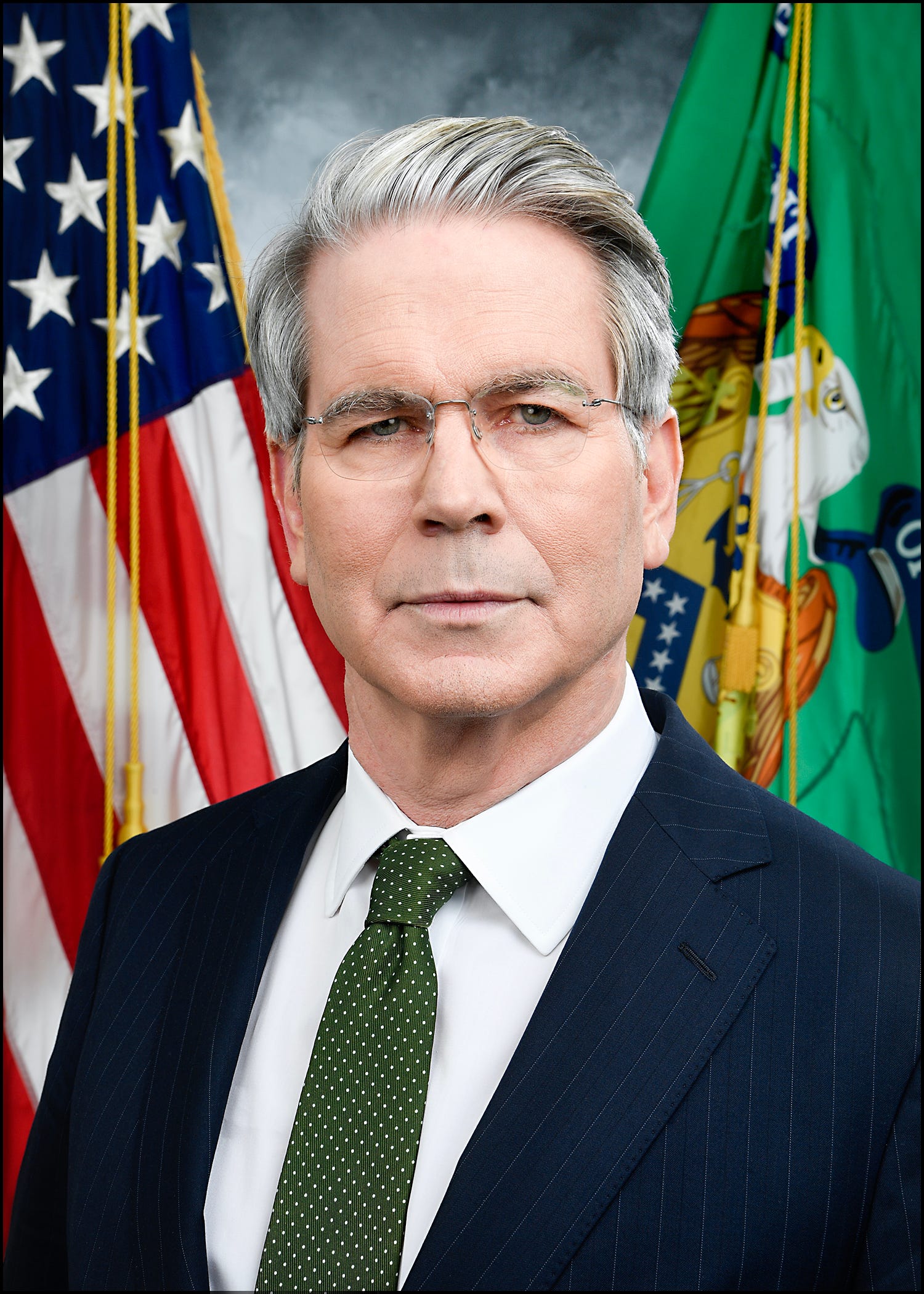
Treasury Secretary Scott Bessent, whose department sanctioned Rosneft and Lukoil in October 2025 and licensed Russian diesel on Oct. 9, 2026. Credit: U.S. Department of the Treasury, public domain via Wikimedia Commons.
Eight days ago, Putin named his price
On Oct. 1, Putin said Russia had enough diesel, “but it won’t reach global markets because of the bans and sanctions in place against our oil and petroleum products,” per Reuters, via Global Banking & Finance Review. Moscow had just extended its ban on diesel exports by producers through Oct. 31, per TASS. The Kyiv Independent reported, citing U.S. and Ukrainian officials, that Russian envoy Kirill Dmitriev told Steve Witkoff and Jared Kushner in September that Moscow wanted sanctions relief as part of any energy truce.
Putin said no diesel without sanctions relief. Eight days later, Russia got the relief, and America got a promise of diesel.
NBC News notes diesel is up almost 70% since the Iran war began in February.
The tough-guy tape
Jan. 20, 2025, the inaugural address: “We will drill, baby, drill.” Energy prices would come down, and America would “export American energy all over the world.” Drill, baby, drill. Import, baby, import.
Aug. 6, 2025: Trump slapped a 25% tariff on India for buying Russian oil. On Feb. 6, 2026, he lifted it because India “committed to stop directly or indirectly importing Russian Federation oil.” A month later, after the Iran war started, Washington gave India a 30-day waiver to buy Russian crude, per CNBC. First a penalty for buying Russian oil, then a permission slip to buy it.
Oct. 22, 2025, in the Oval Office, per ABC News: “These are tremendous sanctions. These are very big. They’re against their two big oil companies, and we hope that they won’t be on for long.” Scott Bessent’s Treasury sanctioned Rosneft and Lukoil, the companies “that fund the Kremlin’s war machine.” One of those hopes came true. It wasn’t the one about the war.
Temporary, the sequel
On March 12, OFAC let the world buy Russian oil already at sea. Bessent called it a “narrowly tailored, short-term measure” and said it would not provide “significant financial benefit to the Russian government.” A day later he conceded it was “unfortunate” that Russia would benefit, “but we hope that it will be [for] a micro period,” per CNBC. On April 15 he said there would be no renewal. On April 17 Treasury renewed it anyway, per RFE/RL. With one lapse, it ran to June 17, per Paul, Weiss and Lowdown. The micro period ran March through June. The new one runs to April 2027.
We covered the run-up in Temporary Exception: Oil and Don’t Hit Diesel. On Sept. 13 Trump said, “Mr. Zelensky has to do one thing. He has to stop knocking out diesel fuel in Russia,” per CBS News. So step one was asking Ukraine to stop hitting Putin’s diesel. Step two was licensing it.
A 2022 order still bans importing Russian petroleum fuels into the U.S.; Trump’s own February order recited it. General License 135 carves diesel out of it: “including importation into the United States.”
Arming one side, fueling the other
Here is the part that should make both parties squirm. America is helping Ukraine fight Russia. Congress appropriated nearly $174.2 billion in Ukraine supplemental funding from 2022 through 2024, per the Congressional Research Service. It didn’t stop in 2026. In May, the State Department approved a $373.6 million sale of JDAM bomb kits to Ukraine. On Sept. 18, it approved a $2.68 billion air-defense package. NATO allies and partners have put $6.7 billion into PURL, the program that buys U.S. weapons for Kyiv, per Ukraine’s Defense Ministry.
Then there’s the intelligence. Defense News reported in August that U.S. intelligence sharing with Kyiv is back at full strength, including, per The Atlantic, “the targeting packages for strikes on Russian-troop positions in Ukraine and on energy infrastructure inside Russia.”
Now the other side of the ledger. Russia’s Finance Ministry said Friday that oil and gas brought in 5.471 trillion rubles, about $64 billion, in the first nine months of 2026, per Xinhua via The Star. That is roughly 18.5% of federal revenue by our math, down from 30.3% in 2024, per the Gaidar Institute. The sanctions were biting. That was the point of them.
So Washington helps Kyiv find Putin’s refineries, then licenses whatever diesel survives. We pay for the missiles and the map, then wave the tanker through. That isn’t a strategy. It’s a subscription to both sides of the war.
The red costume: sanctions with a return policy
On Sept. 18, Trump signed the Lindsey O. Graham Sanctioning Russia and Iran Act, named for the late senator, who called an earlier version “the most draconian bill I’ve ever seen in my life in the Senate,” per Euronews. It orders the president to put its sanctions in place within 30 days, by Oct. 18, per Baker Botts.
On Oct. 7, Republican Roger Wicker and Democrat Jeanne Shaheen urged Rubio and Bessent to speed up enforcement, per EU Global. On Oct. 8, Britain sanctioned two more Russian oil companies and 12 more tankers. On Oct. 9, Washington licensed Russian diesel. With nine days left to tighten the screws, Treasury handed out a screwdriver.
That isn’t energy dominance. That’s SANCTIONS BY THE TON. Every Republican who voted for the Graham Act now has until Oct. 18 to say whether they meant it.
The 1980s called. They want a diesel deal.
On March 26, 2012, Mitt Romney told CNN’s Wolf Blitzer: “Russia, this is, without question, our number one geopolitical foe,” per the CNN Press Room.
At the third debate on Oct. 22, 2012, Barack Obama made it a punch line. Per the Commission on Presidential Debates transcript: “you said Russia, in the 1980s, they’re now calling to ask for their foreign policy back because, you know, the Cold War’s been over for 20 years.” Romney answered: “I’m not going to wear rose-colored glasses when it comes to Russia, or Mr. Putin.”
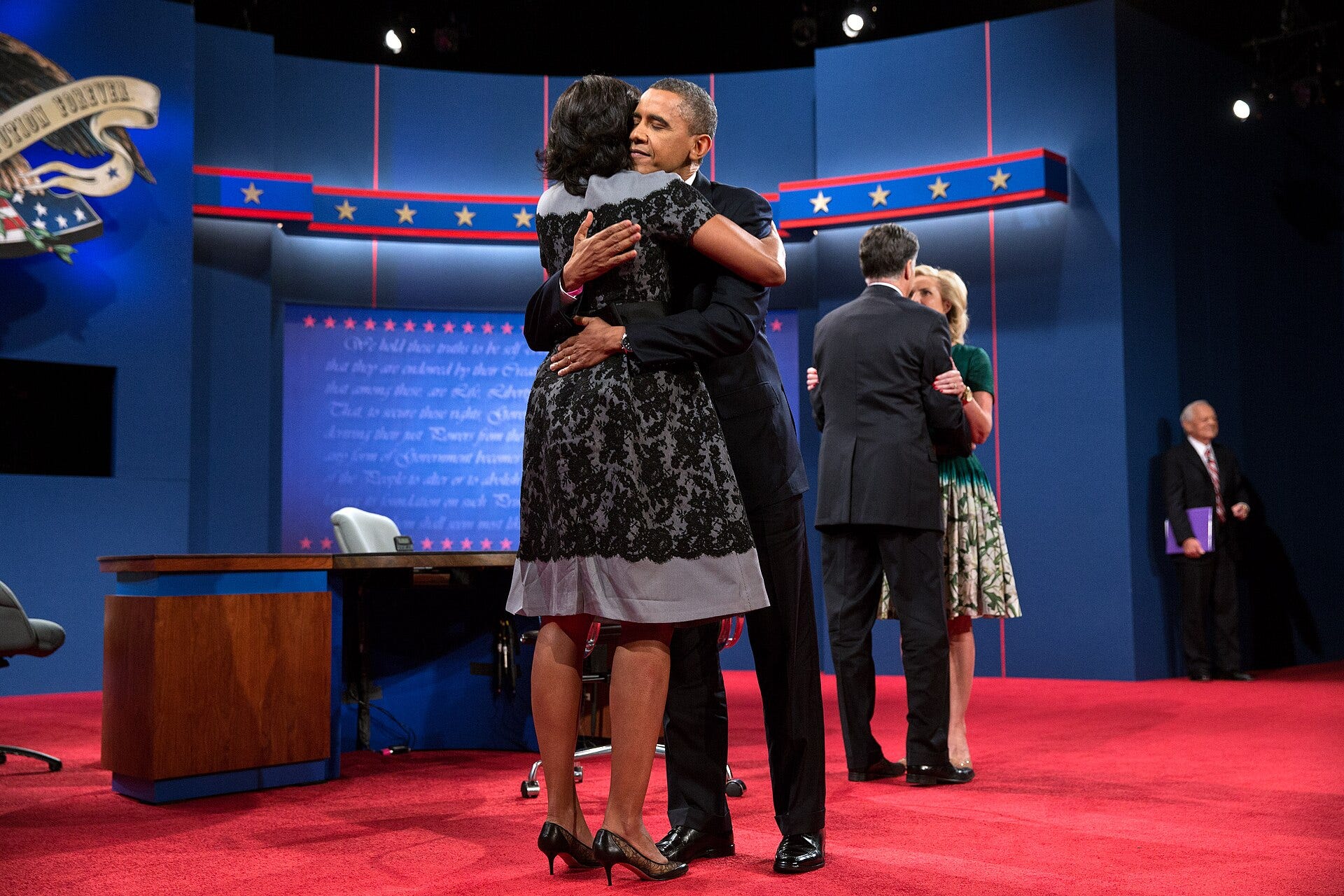
The Obamas, with Mitt and Ann Romney behind them, on stage after the third presidential debate, Lynn University, Boca Raton, Fla., Oct. 22, 2012. Credit: Official White House Photo by Pete Souza, public domain via Wikimedia Commons.
Democrats laughed. Then they spent the Biden years pushing $174 billion through Congress to fight the foe Romney named. By 2022, CNN was running the headline “It’s time to admit it: Mitt Romney was right about Russia.” Republicans cheered Romney in 2012. Their president now calls a phone call with Putin “highly successful.”
Call it the ultimate own-the-libs move: cut a fuel deal with the one villain Mitt Romney and the Democratic Party finally agree on.
The blue costume: a cap is a faucet with a nicer name
Democrats get no free pass. In April, Chuck Schumer, Elizabeth Warren, and Shaheen called the waiver renewal a “180-degree reversal” and said, “This decision is shameful,” per RFE/RL.
In June 2022, Biden’s Treasury Secretary Janet Yellen told senators, “what we want to do is keep Russian oil flowing into the global market to hold down global prices,” per Business Insider. That was the price cap: it kept the oil moving and tried to limit what Russia earned. That November a Reuters headline read: “India can buy as much Russian oil as it wants, outside price cap, Yellen says.”
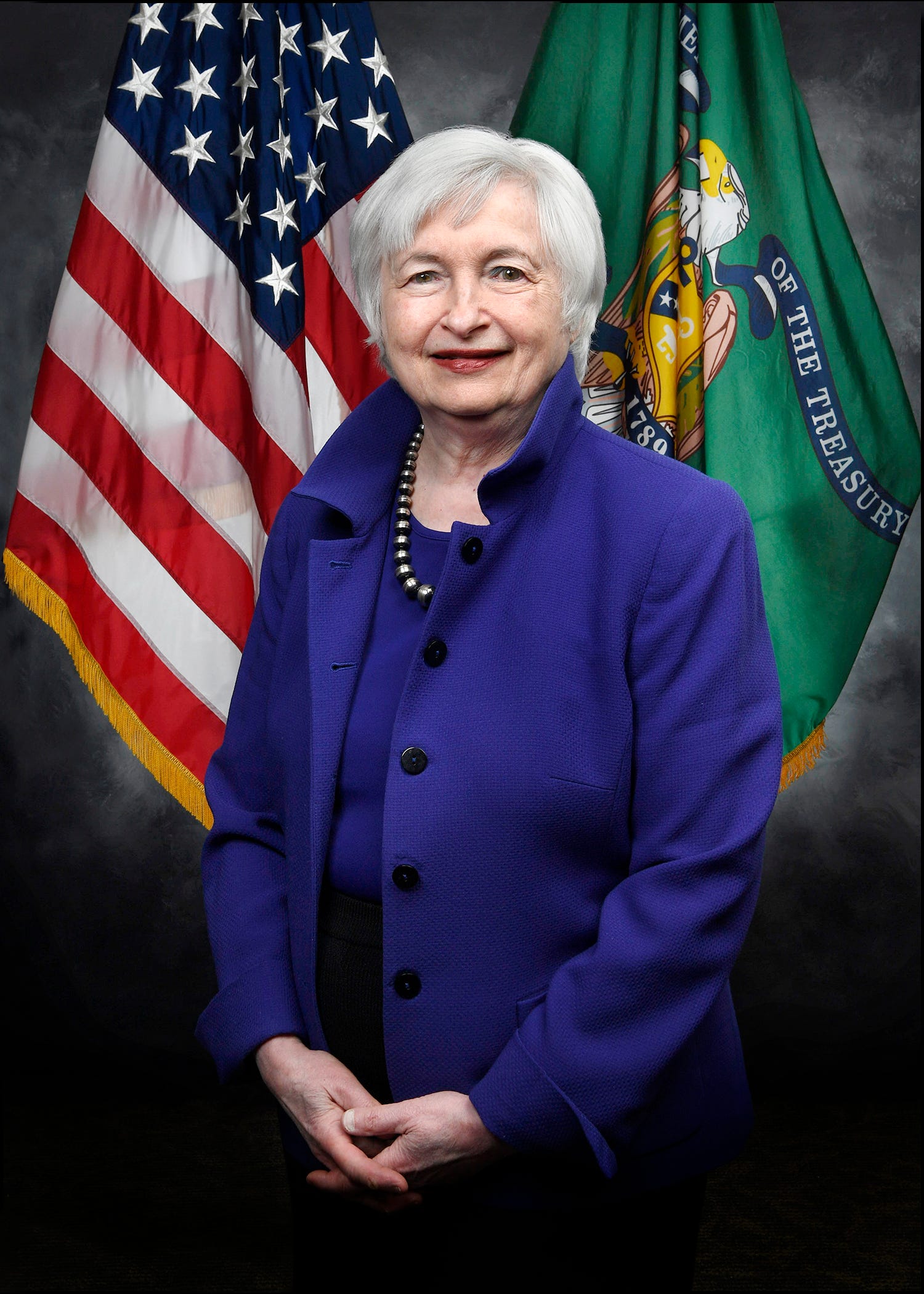
Janet Yellen, Treasury secretary under Biden, who said in 2022, "what we want to do is keep Russian oil flowing into the global market." Credit: U.S. Department of the Treasury, public domain via Wikimedia Commons.
Then came the midterm playbook. Biden released 180 million barrels from the Strategic Petroleum Reserve, leaving it at its lowest level since 1983, per PolitiFact. When OPEC+ cut output by 2 million barrels a day in October 2022, while Biden was “trying to rein in prices at the gas pump ahead of the midterm elections,” the White House called it “shortsighted” and promised 10 million more barrels, per NPR. Same midterm math, different party.
Both costumes
Be fair about the pain. Diesel moves the grain and the freight, farmers and truckers are paying record prices, and a few million barrels might help.
But look at the pattern. Democrat Richard Blumenthal promised “bone-crushing” sanctions. Graham promised “draconian.” Trump promised “tremendous.” Then the pump spiked, and two presidents in a row found a way to keep Russian barrels flowing. Biden called it a price cap. Trump calls it a temporary general license. Putin told everyone his price on Oct. 1, which makes him the only one who didn’t pretend.
If sanctions are worth imposing, they’re worth keeping when gas gets expensive. If they only hold while gas is cheap, they were never sanctions. They were a mood.
Receipts
- Trump on Truth Social, Oct. 9, 2026, 2:46 p.m. ET (text confirmed via Trump’s Truth archive). Diesel tonnages; “COMING DOWN, IN RECORD NUMBERS, AND FAST!”
- U.S. Treasury on X, Oct. 9, 2026. “Temporary general license to allow the supply of Russian diesel to the global market.”
- OFAC General License 135, Oct. 9, 2026 and OFAC recent action. All prohibited transactions related to sale, delivery, offloading, and importation, including into the U.S., of Russian-origin diesel, through April 7, 2027; signed 2:43 p.m. ET.
- NBC News, Oct. 9, 2026. Diesel up almost 70% since February; unclear how it works under sanctions; earlier easing “largely did not impact the trajectory of prices.”
- Reuters via Global Banking & Finance Review, Oct. 1, 2026. Putin: no diesel to global markets until sanctions are lifted.
- TASS, Sept. 30, 2026. Producer diesel export ban extended through Oct. 31.
- Kyiv Independent. Dmitriev asked Witkoff and Kushner for sanctions relief; Ukrainian delegation meeting Oct. 9.
- CNN Press Room, March 26, 2012. Romney: “number one geopolitical foe.”
- Commission on Presidential Debates, Oct. 22, 2012 transcript. Obama’s “1980s” line; Romney’s “rose-colored glasses.”
- CNN, Feb. 22, 2022. “It’s time to admit it: Mitt Romney was right about Russia.”
- Congressional Research Service, IF12305. Nearly $174.2 billion in Ukraine supplemental appropriations, FY2022 through FY2024.
- State Department, May 5, 2026 and State Department, Sept. 18, 2026. $373.6 million JDAM-ER sale; $2.68 billion air-defense sale.
- Ukraine Ministry of Defence. $6.7 billion in PURL contributions from 29 countries.
- Defense News, Aug. 17, 2026. Intel sharing at full strength; The Atlantic on energy-infrastructure targeting packages.
- Xinhua via The Star, Oct. 9, 2026. Russian oil and gas revenue 5.471 trillion rubles vs. 24.168 trillion non-oil-and-gas, January through September 2026.
- Gaidar Institute, 2026. Oil and gas share of federal revenue: 30.3% in 2024, 22.7% in 2025.
- White House, inaugural address, Jan. 20, 2025. “We will drill, baby, drill.”
- White House, Feb. 6, 2026 order. India tariff (EO 14329) lifted; EO 14066 import ban on Russian petroleum fuels.
- ABC News, Oct. 22, 2025 and Treasury press release sb0290. “Tremendous sanctions”; Rosneft and Lukoil designated.
- CNBC, March 13, 2026. “Narrowly tailored”; “micro period”; India waiver.
- RFE/RL, April 18, 2026. Bessent no-renewal, then renewal; Schumer, Warren, Shaheen “shameful.”
- Paul, Weiss and Lowdown on GL 134C. The GL 134 series, March through June 17, 2026.
- CBS News, Sept. 13, 2026. “Stop knocking out diesel fuel in Russia.”
- White House, H.R. 5334 signed and Baker Botts. Graham Act, Oct. 18 deadline.
- EU Global, Oct. 8, 2026. Wicker and Shaheen letter.
- GOV.UK, Oct. 8, 2026. New UK oil and tanker sanctions.
- Euronews, June 2, 2025. Graham “draconian,” Blumenthal “bone-crushing.”
- Business Insider, June 2022. Yellen: “keep Russian oil flowing.”
- Reuters, Nov. 2022. India outside the price cap.
- PolitiFact, Jan. 19, 2023. 180 million barrels; SPR lowest since 1983.
- NPR, Oct. 5, 2022. OPEC+ cut; “shortsighted”; 10 million more SPR barrels.
- Earlier Hypocrisy Democracy: Temporary Exception: Oil and Don’t Hit Diesel.
Upgrade
Free readers see this section as Upgrade to paid. Paid readers pick 1 meme sticker from the Etsy shop HypocrisyDemocracy, plus quarterly sticker packs, discounts and bonus content, and 1 free business strategy & IT consultation a year with Anytech Solutions LLC.
If you haven’t subscribed, now’s a good time. Everything here stays free, always. But pieces like this take days of research, writing, and fact checking, and if you’d like to support that work, paid subscriptions are there. Thank you for your support!
Thanks for reading, sharing, and commenting.
Subscribe. Donate. hypocrisydemocracy.net. Hypocrisydemocracy@pm.me.
Originally published on Substack.