10 Hypocritical Stances Attributed to Republicans — and 10 to Democrats
Twenty gaps between what each party says and what each party does. Every one has a receipt attached — click through and check them yourself.
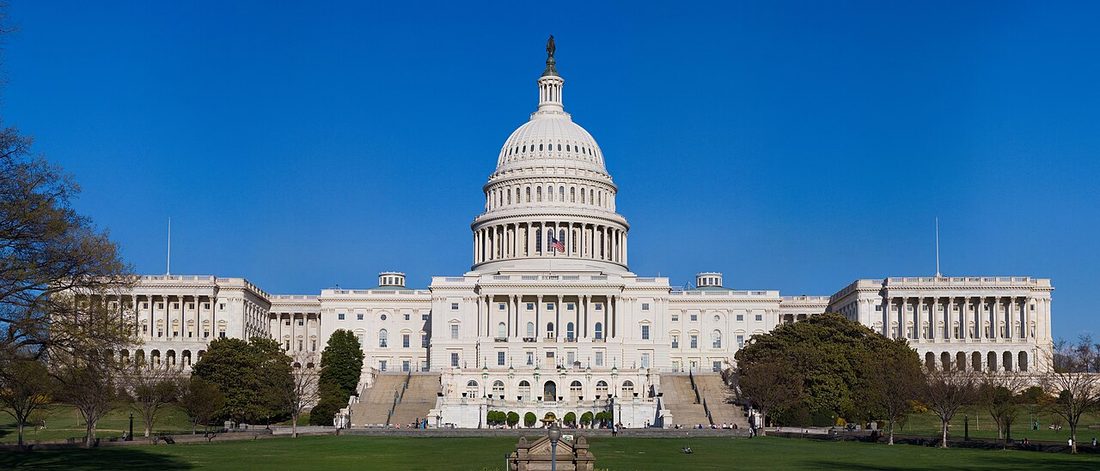
Every party claims a set of principles. Every party, in office, runs into moments where the principle is expensive and the exception is convenient. That gap is what this site is about.
What follows is not an argument that one side is worse. It's twenty documented instances where stated principle and actual conduct pulled apart — ten pointed at Republicans, ten at Democrats. Each point cites specific, checkable evidence. Where a claim is contested, it's labeled contested. Where something is a matter of court record, it's labeled that too.
Read both halves. If only one of them makes you angry, that's worth sitting with.
The Republican Ten
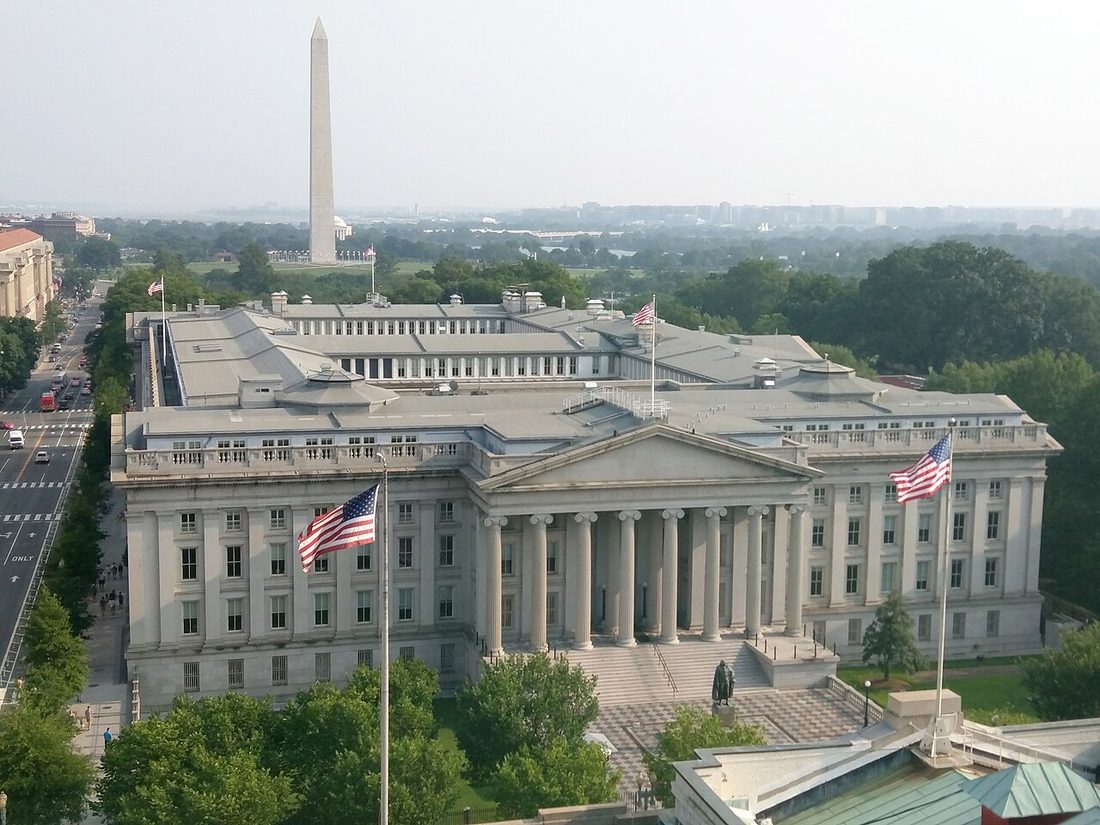
1. Fiscal conservatism vs. actual spending
The stance: Lower taxes, smaller government, balanced budgets.
The tension: The 2017 Tax Cuts and Jobs Act — the signature Republican fiscal achievement — was scored by the Congressional Budget Office as increasing deficits by roughly $1.9 trillion over 2018–2028, even after accounting for faster economic growth. Deficits ran near or above $1 trillion in a growing, pre-pandemic economy.
Evidence: CBO — How the 2017 Tax Act Affects CBO's Projections • CRFB — 2017 Tax Cuts Continue to Lose Revenue • Treasury — Debt to the Penny
2. "Family values" vs. personal conduct
The stance: The party of traditional marriage and moral character in public life.
The tension: Two matters of court record, not allegation. Former House Speaker Dennis Hastert — the longest-serving Republican Speaker, who led the impeachment of Bill Clinton over an affair — pleaded guilty in 2015 to a financial charge tied to hush payments; at sentencing the judge called him "a serial child molester." In 2024, Donald Trump was convicted on 34 felony counts of falsifying business records connected to hush-money payments concerning an alleged affair.
Evidence: DOJ — Hastert sentencing • NPR — Trump found guilty on 34 counts
A note on fairness: sexual misconduct is not a partisan monopoly, and this post's Democratic list should be read with that in mind. The two cases above are cited because they are adjudicated, not alleged.
3. Free markets vs. protectionism
The stance: Free trade, open markets, government out of the way.
The tension: Republican administrations have imposed some of the largest peacetime tariffs in modern U.S. history — steel and aluminum tariffs under Section 232, and broad tariffs on Chinese goods — which economists across the spectrum describe as taxes paid largely by domestic importers and consumers.
Evidence: Tax Foundation — Tariff tracker and cost estimates
4. States' rights vs. federal intervention
The stance: Decisions belong closer to the people — let the states decide.
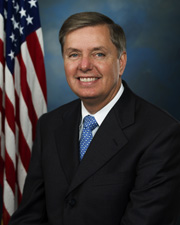
The tension: After Dobbs returned abortion to the states, Senator Lindsey Graham introduced a federal 15-week abortion ban that would override more permissive state laws. The principle applied when states restricted; it bent when states permitted.
Evidence: Congress.gov — S.4840, Protecting Pain-Capable Unborn Children from Late-Term Abortions Act • NPR — Graham introduces 15-week national ban
5. Law and order vs. January 6

The stance: Back the blue. Prosecute violent crime to the fullest extent.
The tension: On January 20, 2025, clemency was granted to roughly 1,500 January 6 defendants, including people convicted of assaulting police officers and of seditious conspiracy — among them Proud Boys leader Enrique Tarrio, who had been serving a 22-year sentence.
Evidence: NPR — Trump grants clemency to all defendants in Jan. 6 cases • DOJ — Capitol Breach Cases database
6. Religious freedom vs. religious discrimination
The stance: Government must not burden religious exercise.
The tension: The travel restrictions upheld in Trump v. Hawaii (2018) applied to several majority-Muslim countries. The Court upheld them 5–4 on national-security grounds; the dissent argued the policy was rooted in religious animus. Both readings are in the opinion — read it and judge.
Evidence: Supreme Court — Trump v. Hawaii, 585 U.S. 667 (2018), full opinion and dissent
7. Anti-"entitlement" rhetoric vs. protecting the biggest entitlements
The stance: Runaway entitlement spending is the core driver of the debt.
The tension: Social Security and Medicare are the two largest such programs and the primary long-run drivers of projected debt — and are also the two most fiercely protected from cuts in campaign messaging. The math and the promise do not both survive.
Evidence: CBO — Budget topics and long-term outlook • Social Security & Medicare Trustees Reports
8. Balanced budgets vs. tax cuts that widen the gap
The stance: Washington has a spending problem; budgets should balance.
The tension: Analyses of the 2017 tax law found the largest proportional after-tax income gains flowed to the highest earners, while the law added substantially to deficits. Individual provisions were also written to expire, while corporate cuts were made permanent.
Evidence: Tax Policy Center — Distributional analysis of the TCJA • CRFB — Revenue effects of the 2017 tax cuts
9. Small government vs. regulating personal life
The stance: Government should stay out of your business.
The tension: Since Dobbs, more than a dozen states have enacted near-total abortion bans, and numerous states have passed laws restricting gender-affirming care for minors and classroom discussion of sexuality — an expansion of state authority over private and medical decisions.
Evidence: Guttmacher Institute — State abortion policy tracker • Movement Advancement Project — State equality maps
10. Tough on adversaries vs. deference to Putin
The stance: Peace through strength; no accommodation of hostile powers.
The tension: At the 2018 Helsinki summit, standing beside Vladimir Putin, President Trump publicly cast doubt on his own intelligence agencies' unanimous finding that Russia interfered in the 2016 election. The full transcript is public.
Evidence: White House transcript — Helsinki press conference, July 16, 2018 • ODNI — Assessing Russian Activities in Recent US Elections
The Democratic Ten
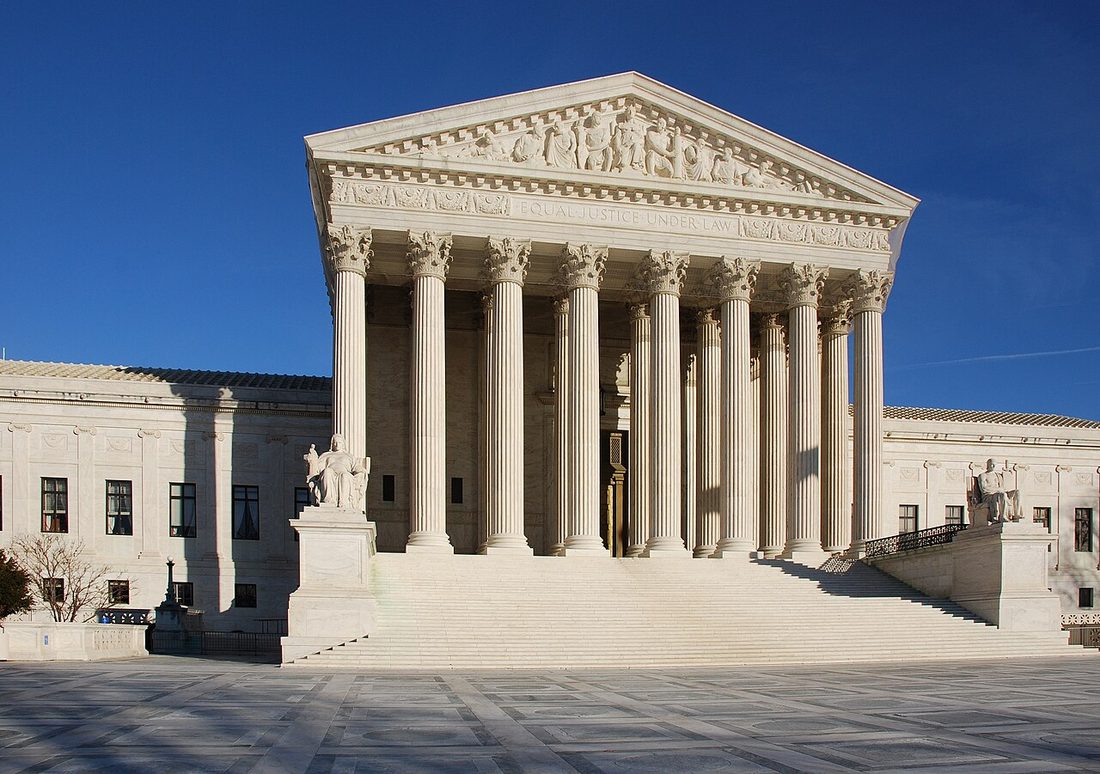
1. Climate leadership vs. approving the drilling
The stance: Climate change is an existential crisis; no new drilling on federal land.
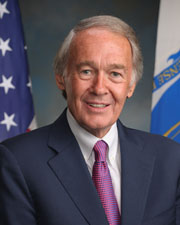
The tension: In March 2023 the Biden administration approved ConocoPhillips' Willow Project in Alaska — three drilling pads producing roughly 92% of the oil originally sought, with an estimated 260 million metric tons of greenhouse gas emissions. Democratic senators, including Ed Markey, said it broke a campaign promise.
Evidence: CNN — Biden administration approves Willow oil project • Earthjustice response
2. Campaign finance reform vs. taking the money
The stance: Citizens United was a disaster; get big money out of politics.
The tension: Democratic candidates and aligned super PACs have raised and spent at or above Republican levels in recent cycles. Outside spending across both parties exceeded $10 billion in the 2024 cycle. Reform is the platform; the money is taken anyway.
Evidence: OpenSecrets — Outside spending by cycle • FEC — Campaign finance data
3. Public schools vs. private schooling for their own kids
The stance: Public education is a public good that deserves full investment.
The tension: Prominent Democratic officeholders have routinely enrolled their own children in elite private schools — the Obamas at Sidwell Friends being the most-cited example — while opposing vouchers that would extend private options to lower-income families.
Evidence: Sidwell Friends School — presidential families among its alumni • Ballotpedia — School choice positions by party
4. Anti-war posture vs. military action
The stance: Skepticism of intervention and of the defense budget.
The tension: The 2011 Libya intervention was launched without congressional authorization; drone strikes expanded substantially under the Obama administration; and defense budgets have risen under Democratic presidents as well as Republican ones.
Evidence: Bureau of Investigative Journalism — Drone strike data
5. Fighting inequality vs. personal wealth accumulation
The stance: The system is rigged for the wealthy and must be rebalanced.
The tension: Congressional net worth substantially exceeds the median American household's, in both parties, and members of both parties have faced scrutiny over well-timed stock trades. Legislation to ban congressional stock trading has repeatedly stalled — with resistance from leadership in both parties.
Evidence: OpenSecrets — Personal finances of members of Congress • OpenSecrets — Reporting on congressional insider trading
6. Free speech vs. pressure to remove content
The stance: Defenders of the First Amendment against censorship.
The tension: In Murthy v. Missouri, plaintiffs argued Biden administration officials unlawfully pressured social platforms to remove content. The Supreme Court ruled in 2024 that the plaintiffs lacked standing — meaning the case was decided on procedure, not on whether the pressure was proper. The underlying communications are in the record and worth reading directly.
Evidence: Supreme Court — Murthy v. Missouri (2024), full opinion • Fifth Circuit opinion below
7. Affordable housing vs. blocking it locally
The stance: America has a housing shortage and needs far more supply.
The tension: The tightest housing markets and most restrictive zoning are concentrated in deep-blue metros — the Bay Area, Los Angeles, greater Boston. California has had to pass a series of state laws specifically to override local opposition to housing.
Evidence: California HCD — Housing element and state housing law enforcement • UC Berkeley Terner Center — Local barriers to housing production
8. Identity-based politics vs. universal policy
The stance: Both group-specific remedies and universal programs are championed, sometimes in the same speech.
The tension: This one is a genuine philosophical conflict rather than a documented reversal, and it's fair to say so. The clearest concrete instance: the Supreme Court struck down race-conscious college admissions in 2023, forcing a live argument on the left about whether remedies should be race-based or class-based.
Evidence: Supreme Court — Students for Fair Admissions v. Harvard (2023)
Labeled honestly: contested framing, not a proven hypocrisy.
9. Anti-lobbying rhetoric vs. the revolving door
The stance: Break the grip of lobbyists on Washington.
The tension: Every recent administration of both parties has hired from industry and sent officials back to it. Watchdogs have documented lobbyist and industry hires in Democratic administrations despite explicit pledges limiting them.
Evidence: OpenSecrets — Revolving door database
10. Diversity advocacy vs. staff composition
The stance: Institutions should reflect the people they serve.
The tension: Studies of congressional staffing have repeatedly found senior staff far less diverse than the population — including in Democratic offices, where the commitment is loudest.
Evidence: Joint Center for Political and Economic Studies — Racial diversity among top Senate staff • Joint Center — House staff diversity
What to do with this
A few honest caveats, because a post about hypocrisy that overclaims is its own punchline:
- These are tensions, not verdicts. Some are flat contradictions with court records attached. Others are the ordinary friction of governing, where a principle meets a hard trade-off. They aren't equivalent, and the citations let you tell which is which.
- Individual conduct isn't the whole party. One senator's bill is not two hundred people's position.
- Both lists are incomplete. Twenty is a starting point, not an accounting.
The point isn't that everyone is equally bad. It's that your side does this too, and the reflex to explain away your team's version while sharpening the knife for the other guy's is the actual engine of the problem.
Found one that's wrong, or have a better citation? Tell us — corrections get made and noted.