
Review & Repeal Citizens United
A 5–4 decision in 2010 rewired how American elections are funded. Here's what it actually said, what it actually did, and why the case for revisiting it keeps getting stronger — with the receipts.
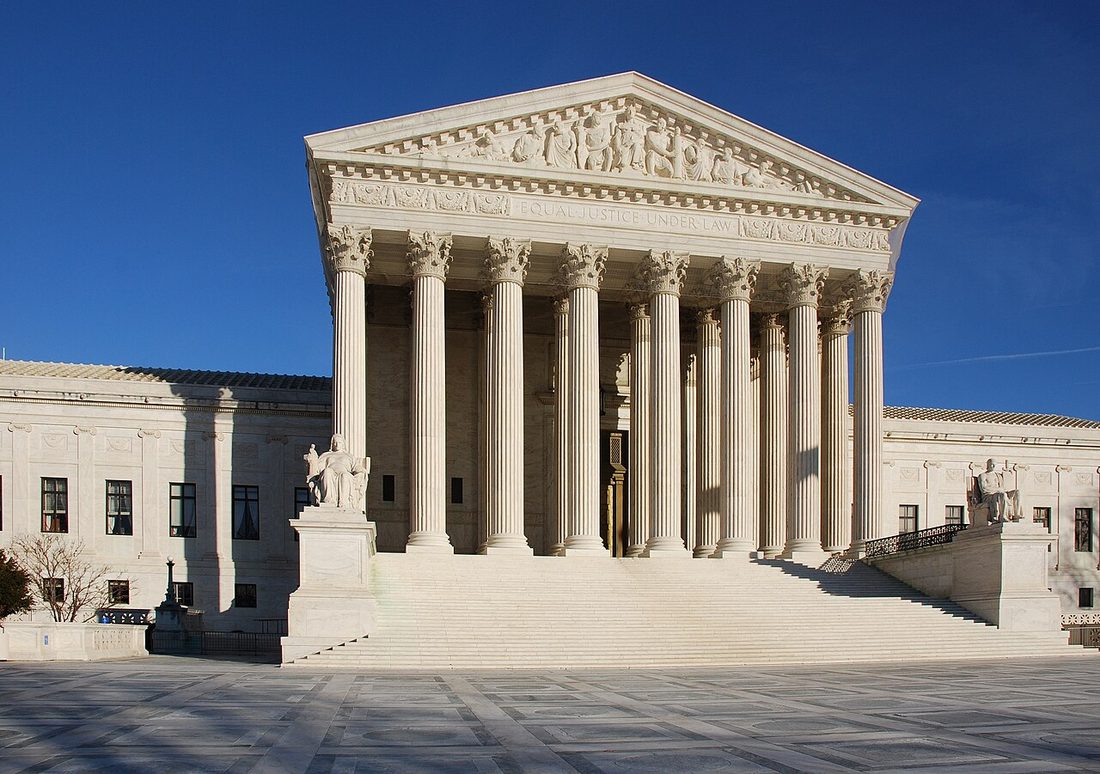
Imagine you're standing at the crossroads of free speech and democratic integrity — what path would you choose if unlimited funds could flood into elections?
That is the essence of Citizens United v. FEC. Rather than just reciting the facts, let's work through it together: the ruling's details, its ripple effects, and the controversies that trail it. Questions along the way are there to be answered by you, not by me.
Every factual claim below links to a source. Where a figure is an estimate that varies between trackers, it says so.
What Was the Case, and Why Did It Matter?
Have you ever wondered how a documentary about a presidential candidate could spark a constitutional earthquake?
In 2008, the nonprofit group Citizens United produced Hillary: The Movie, a film critical of then-Senator Hillary Clinton during her presidential run. The Federal Election Commission blocked its broadcast close to the election, citing rules restricting corporations from funding "electioneering communications" — ads naming candidates within 30 days of a primary or 60 days of a general election. Citizens United sued, arguing this violated the First Amendment.
On January 21, 2010, the Supreme Court sided with Citizens United 5–4. Justice Anthony Kennedy's majority opinion held that political spending is protected speech, and that corporations, unions, and nonprofits hold speech rights comparable to individuals. The ruling struck down parts of the Bipartisan Campaign Reform Act — McCain-Feingold — freeing these entities to spend without limit on independent expenditures, so long as they don't coordinate directly with candidates.
But pause here: if money equals speech, do those with more money have louder voices? What does that imply for political equality?
Justice John Paul Stevens, in a 90-page dissent joined by three colleagues, warned of "corporate domination" of elections, arguing corporations are not people and should not hold unchecked influence. Both the majority and the dissent are in the linked opinion — read them and judge for yourself rather than taking anyone's summary, including mine.
How Has It Transformed U.S. Politics?
Think about a world where elections cost billions — because that is the one we now live in.
Since 2010, super PACs — committees that may raise and spend unlimited sums independently — have proliferated, along with "dark money" routed through nonprofits that need not name their donors. Outside spending has climbed to record levels cycle after cycle.
Sources: OpenSecrets — Outside spending by cycle • OpenSecrets — Dark money basics • FEC — Independent expenditure data
Ask yourself: if voters cannot see who funds an ad, what does that do to trust in the result?
Research on the ruling's effects is genuinely mixed — some studies find measurable shifts in election outcomes and legislative behavior, others find smaller effects than either side claims. That disagreement is worth knowing about rather than papering over.
Sources: Brennan Center — Citizens United's aftermath • Congressional Research Service — Campaign finance law after Citizens United
States have pushed back with uneven results. Montana's century-old corporate spending ban was struck down in American Tradition Partnership v. Bullock (2012), where the Court summarily reversed the Montana Supreme Court and applied Citizens United to the states.
Source: Justia — American Tradition Partnership, Inc. v. Bullock, 567 U.S. 516 (2012)
What reforms might restore balance — and why haven't they happened?
The Ethics Question: Clarence Thomas and Harlan Crow
Justice Clarence Thomas, who joined the Citizens United majority, has faced sustained scrutiny over gifts from Dallas billionaire Harlan Crow that went undisclosed for years.
ProPublica's reporting documented luxury travel accepted "virtually every year" for more than two decades — private jet flights, international yacht cruises, annual stays at Crow's private Adirondacks resort — plus private school tuition for a Thomas relative and an undisclosed 2014 real estate transaction. Justices are generally required to report gifts worth more than $415. ProPublica characterizes the total value as "likely in the millions"; watchdog groups have published higher point estimates, but treat any single dollar figure as an estimate rather than an audited number.
In a 2024 filing, Thomas acknowledged for the first time that he should have reported two 2019 trips that ProPublica had revealed.
Sources: ProPublica — Clarence Thomas secretly accepted luxury trips from GOP donor • ProPublica — Thomas acknowledges he should have disclosed the trips • NPR — More gifts from billionaire benefactors
Thomas has said the hospitality came from personal friends and did not require disclosure under the rules as they stood. Ethics scholars disagreed, and the Judicial Conference has since tightened its guidance. The Court adopted its first written ethics code in November 2023 — notably, without an enforcement mechanism.
Source: Supreme Court — Code of Conduct for Justices (November 2023)
The honest framing: Citizens United did not cause any of this, and no one has shown it did. What connects them is a climate in which enormous private wealth moves close to public power with thin disclosure. That's a fair argument to make — it is not the same as a proven quid pro quo, and this post doesn't claim otherwise.
Who Gets Rich? Wealth and Office
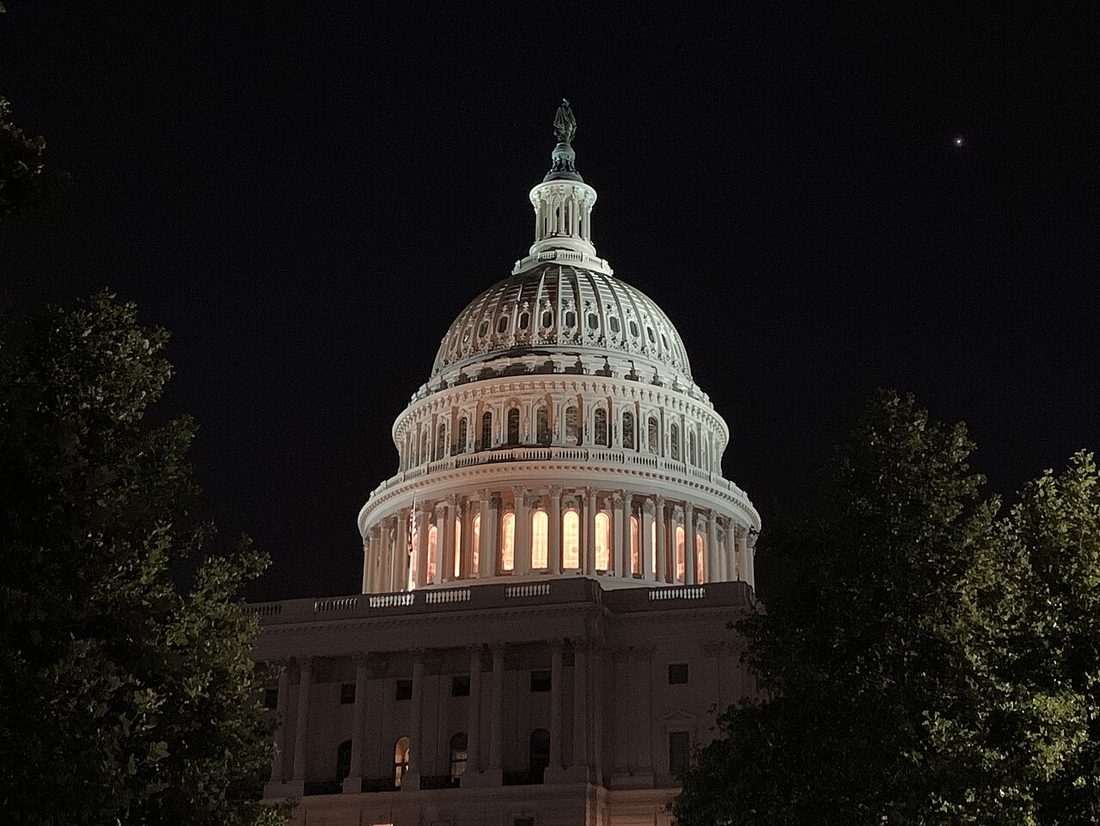
Many enter Congress with modest means and leave considerably wealthier. Below are ten frequently-cited names — deliberately drawn from both parties, because this is a systemic problem rather than a partisan one.
Read the numbers carefully. Congressional net worth is reported as a range, not a figure, because disclosure forms only require broad brackets. Estimates therefore vary substantially between trackers and between years. Every figure here should be checked against the source rather than quoted as precise.
Source for all net worth figures: OpenSecrets — Personal finances of members of Congress • House and Senate official disclosure databases
- Nancy Pelosi (D-CA) — Her household's stock trades, executed by her financier husband, have repeatedly drawn attention for their timing. Why might proximity to legislation create an information edge?
- Mitch McConnell (R-KY) — Wealth tied substantially to family shipping interests and inheritance. How do long tenures build wealth networks?
- Rick Scott (R-FL) — Entered the Senate already wealthy from healthcare ventures. Does pre-office wealth insulate from scrutiny, or invite it?
- Mitt Romney (R-UT) — A private equity fortune preceding office. Where are the lines between business and public service?
- Kelly Loeffler (R-GA, former) — Stock sales after early COVID briefings drew investigation; the DOJ closed its inquiry without charges.
- David Perdue (R-GA, former) — An unusually active trader during his Senate tenure; investigated and closed without charges.
- Dianne Feinstein (D-CA, former) — Her late husband's investments overlapped with committee jurisdiction. Do spousal assets create real conflicts?
- Richard Burr (R-NC, former) — Sold stock before the 2020 crash after pandemic briefings; the DOJ closed its investigation without charges.
- Chuck Schumer (D-NY) — Long-standing financial-sector donor ties. How does donation access translate into influence?
- Elizabeth Warren (D-MA) — Wealth largely from books and academia while campaigning against concentrated wealth. Can reformers escape the system they critique?
On items 5, 6, and 8: investigations were opened and closed without charges. Suspicious timing is not a crime, and this post is not alleging one. What the pattern does show is that the STOCK Act's disclosure regime is weakly enforced — violations typically draw a $200 late fee — and that repeated attempts to ban congressional stock trading outright have stalled under leadership of both parties.
Sources: Campaign Legal Center — STOCK Act enforcement • OpenSecrets — Congressional net worth rankings • Congress.gov — Pending stock trading ban proposals
Organized Money: The AIPAC Example
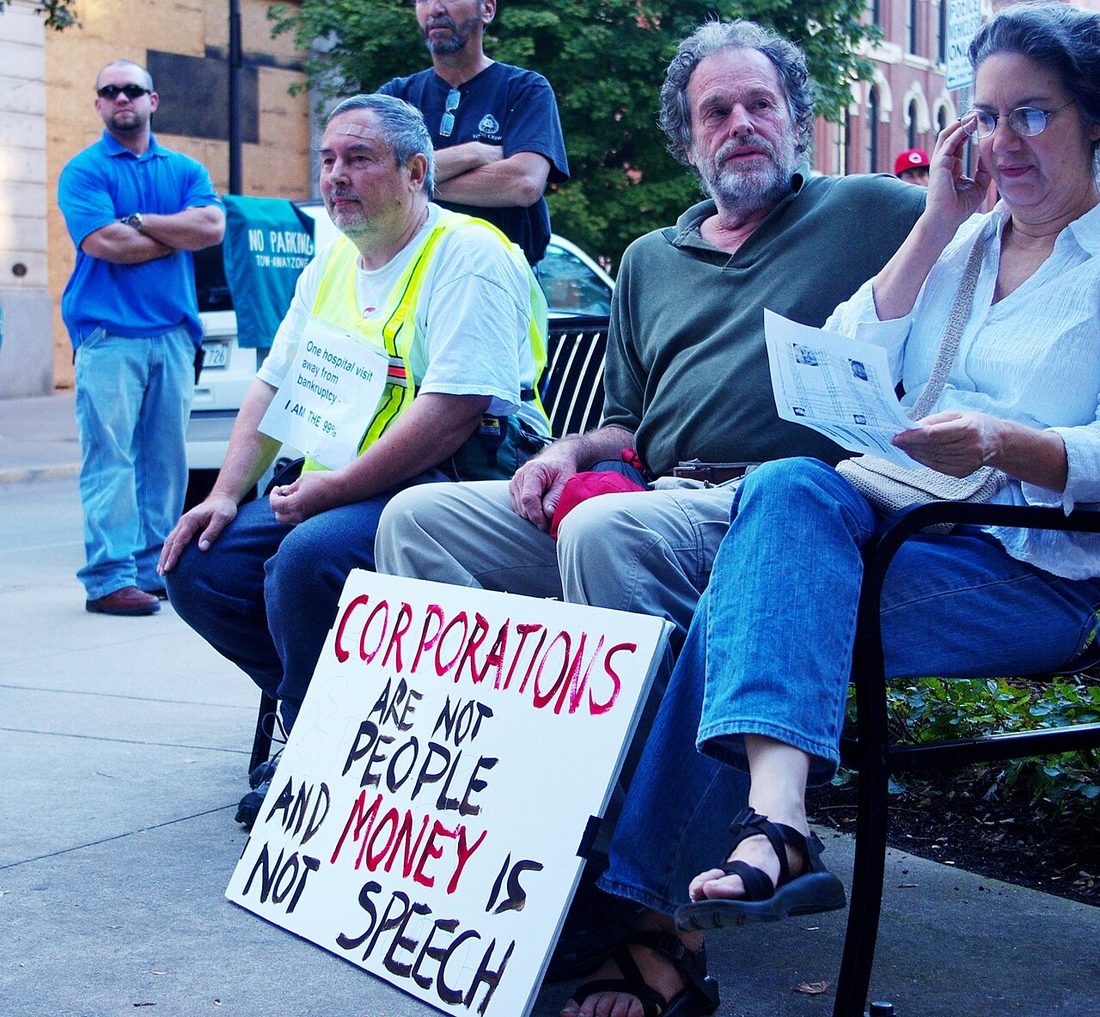
AIPAC and affiliated pro-Israel PACs are a useful case study in how organized giving works — not because they are unique, but because they are unusually bipartisan and well documented, which makes the mechanics visible.
In the 2024 cycle, AIPAC's affiliated super PAC (United Democracy Project) and its connected PAC spent at record levels, including heavily in Democratic primaries — one of the largest single-issue spending operations in modern congressional politics.
Sources: OpenSecrets — AIPAC profile and recipient totals • OpenSecrets — United Democracy Project super PAC • FEC — Committee filings
A necessary caution on the numbers. Career totals for individual senators circulate widely and are frequently wrong, because they mix direct PAC contributions, individual donations bundled from members, and independent expenditures made about a candidate rather than to them — three very different things. Rather than reprint a list of figures I cannot individually verify, the OpenSecrets links above let you pull any senator's actual record yourself. If you are going to cite a number, cite it from there.
The real question isn't whether one group gives money — it's whether any single-issue operation should be able to decide primaries at that scale. Does the spending reflect genuine constituency support, or manufacture the appearance of it?
So What Would "Repeal" Actually Take?
This is where the slogan meets the machinery. Citizens United was decided on constitutional grounds, so Congress cannot simply legislate it away. The realistic paths:
- A constitutional amendment — proposed repeatedly, never close to the two-thirds and three-quarters thresholds required
- The Court overruling itself — possible in principle; requires a differently composed Court and a suitable case
- Disclosure laws — the most achievable in the near term. Notably, the Citizens United majority itself upheld disclosure requirements 8–1, which means transparency legislation sits on far firmer constitutional ground than spending limits. The DISCLOSE Act has been introduced repeatedly and blocked by filibuster.
- Public financing and small-donor matching — sidesteps the ruling entirely by changing where candidates get money, rather than restricting what others may spend
Sources: Brennan Center — Solutions for money in politics • Congress.gov — DISCLOSE Act
That 8–1 disclosure holding is the most underused fact in this entire debate. If you want something achievable, that's where the leverage is.
Where This Leaves Us
A closing note in keeping with this site's premise: the money problem is not one party's. Both parties denounce big money while raising it. Both have blocked stock-trading bans. Both have super PACs they decline to disown. Any version of this argument that only indicts your opponents isn't reform — it's recruitment.
What new questions does this raise for you? Check the sources, disagree with the framing, and tell us if something here is wrong — corrections get made and noted.
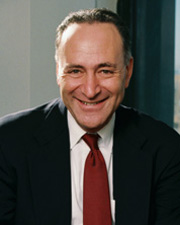 Charles E. SchumerU.S. Senator (NY)
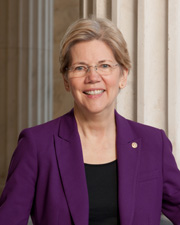 Elizabeth WarrenU.S. Senator (MA)
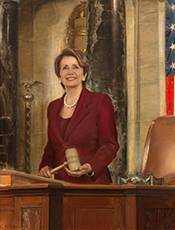 Nancy PelosiU.S. Representative (CA-11)
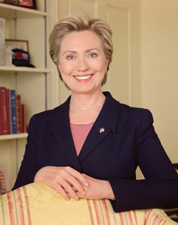 Hillary ClintonFormer U.S. Senator (NY)
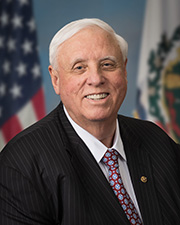 James C. JusticeU.S. Senator (WV)
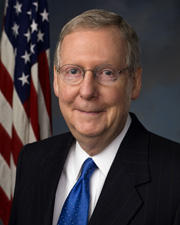 Mitch McConnellU.S. Senator (KY)
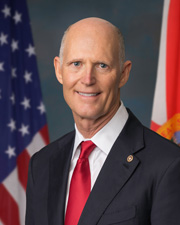 Rick ScottU.S. Senator (FL)
 Mark KellyU.S. Senator (AZ)
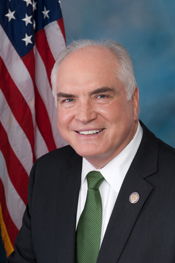 Mike KellyU.S. Representative (PA-16)
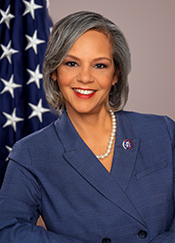 Robin L. KellyU.S. Representative (IL-02)
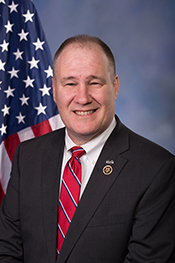 Trent KellyU.S. Representative (MS-01)